
Garage tool
Premix calculator
Pick your ratio, say how much fuel you are mixing, and pour with confidence.
37 bikes with the ratio printed in the owner's manual. Your oil's own instructions still apply.
—
—
Measure the oil, then add fuel to it — pouring oil into a part-filled can mixes far better than the other way round.
Ratios here are fuel to oil, the convention used on the bottle and in your manual. Use the ratio your engine builder or manual specifies rather than the one that sounds safest: too much oil leans the mixture out.
Two-stroke oil
4 two-stroke oils at MotoSport, chosen by a fixed rule: one per brand, from brands it carries in depth, spread across the price range. We have not tested them; mix to the ratio your owner’s manual prints.
These are affiliate links: we may earn a commission, at no cost to you, and it never changes the specs. Affiliate disclosure.
 Yamalube2R Two Stroke Oil - 1 Pint$9.49Buy at MotoSport
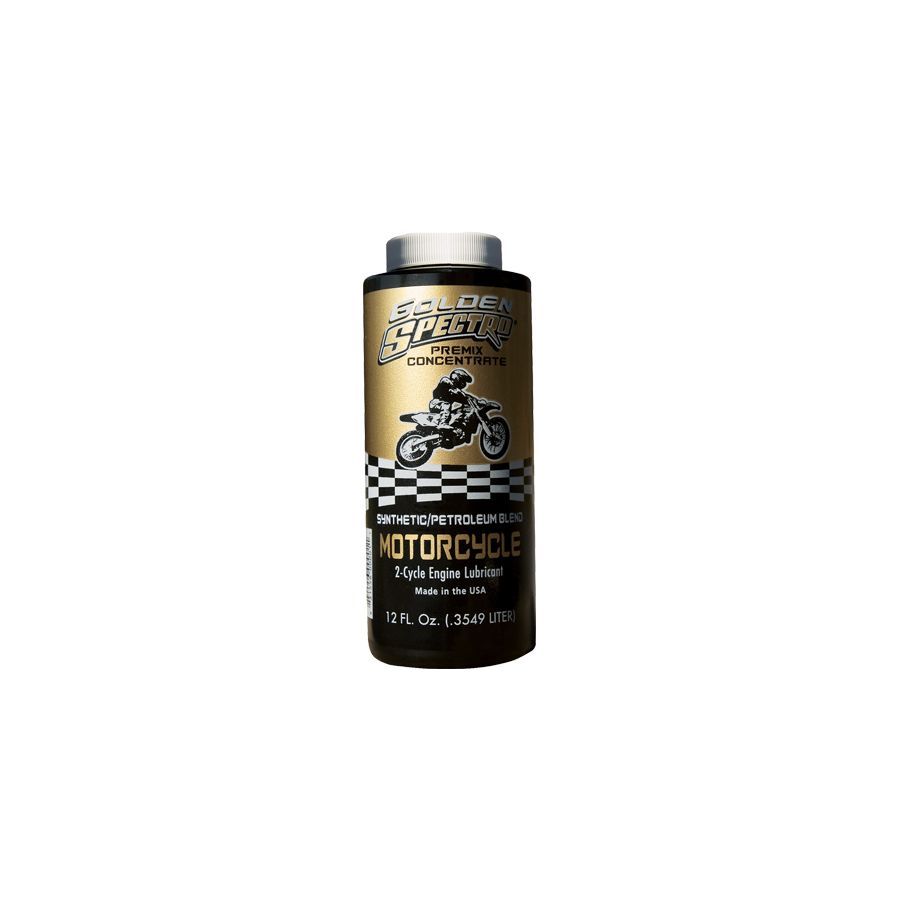 SpectroGolden 2-Cycle Semi-Synthetic Oil - 12oz$12.20Buy at MotoSport
 KlotzTechniplate Synthetic 2-Stroke Oil - TC-W2 - 1 Quart$17.85Buy at MotoSport
 Motul800 2T Pro Racing Premix - 1 Liter$36.92Buy at MotoSport
Prices and stock from MotoSport's product catalog on Oct 19, 2026; they change, so check the price at MotoSport before you buy. A catalog selection, not a recommendation.
Getting it right
Use the ratio your manual or engine builder specifies. Richer is not automatically safer: oil displaces fuel, so more oil leans out the fuel-air mixture, which can run the engine hotter rather than cooler.
Mix in the can, not the tank. Put the oil in first, add a little fuel, swirl, then fill the rest. Fuel poured onto oil sitting in the bottom of an empty can mixes poorly.
Label the can with the ratio and the date. Pump fuel goes off within a few weeks, and mixed fuel goes off faster.
These numbers are arithmetic, not opinion: oil volume is fuel volume divided by the ratio. The only judgement call is which ratio, and that one belongs to your manual.